


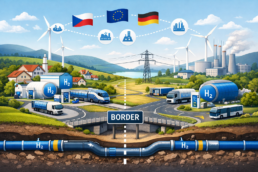
Hydrogen Reality VII: Clean Hydrogen Partnership – The International Dimension of Hydrogen Projects
When discussing European support for hydrogen, attention is often focused on RFNBO regulation and the conditions for renewable hydrogen produced via electrolysis. However, less attention is paid to the fact that alongside these instruments, there are programmes that support a broader range of technological solutions and, above all, systemic, international projects.
One of these is the Clean Hydrogen Partnership (CHP).
What is the Clean Hydrogen Partnership?
The Clean Hydrogen Partnership is a European initiative focused on research, demonstration and the system integration of hydrogen technologies. Its objective is not only to support individual installations, but to build functional ecosystems that connect:
- hydrogen production,
- distribution and infrastructure,
- concrete applications in industry, mobility and energy,
- and, importantly, international collaboration among multiple partners.
Unlike some other instruments, support is not limited exclusively to hydrogen that meets the definition of RFNBO. Projects are evaluated primarily based on:
- technological innovation,
- system integration,
- contribution to decarbonisation,
- and the ability to create a long-term sustainable operational model.
This opens the door for projects based on circular economy principles, the use of biogenic resources, or the combination of multiple technological approaches within a single system.
Hydrogen Valleys: The Region as the Foundation
One of the key concepts of the Clean Hydrogen Partnership is the so-called Hydrogen Valleys – regional projects that connect hydrogen production, infrastructure and specific use cases within a defined territory.
What matters here is not only the technology, but:
- real hydrogen demand,
- the involvement of multiple sectors,
- long-term economic sustainability,
- and coordination among stakeholders at the regional level.
In this context, hydrogen is not an isolated project, but part of a broader regional transformation strategy.
Cross-border cooperation as a strategic advantage
Cross-border regions represent a specific opportunity. Neighbouring areas often share:
- similar industrial structures,
- logistics connections,
- energy infrastructure,
- and common challenges related to transformation.
A smaller, realistically designed project on one side of the border can serve as a pilot step. If it is based on real demand and functional partnerships, it can gradually expand – adding further production capacities, additional off-takers and new infrastructure elements.
Such an approach allows the hydrogen ecosystem to be built step by step, without excessive upfront investments and regardless of administrative borders between countries. Over time, this can lead to the creation of an interconnected system that respects the economic logic of the region while using the international dimension as an advantage rather than a barrier.
IF and CHP: Different roles, shared objective
European hydrogen support instruments do not compete with each other – on the contrary, they complement one another.
- The Innovation Fund focuses primarily on the investment phase of large-scale projects and significant emission reductions at industrial scale.
- The Clean Hydrogen Partnership supports the creation of international consortia, demonstration of solutions and system integration at the regional level.
However, successful projects are not created as a reaction to a newly opened call. They emerge where there is:
- clearly defined regional potential,
- verified demand,
- established partnerships,
- and a realistic, step-by-step pathway from preparation to implementation.
What does this mean for Czech regions?
The Clean Hydrogen Partnership is not just “another funding opportunity”. It is a tool that enables the integration of regional strategy, technological solutions and international cooperation into a single functional framework.
For regions that think systematically and are prepared to first validate their potential, it can represent a logical next step – especially in combination with other European or national instruments.
The key is not to look at individual calls in isolation, but to connect them into a long-term development concept. The ability to combine regional needs, technological options and suitable financial instruments into a coherent project will be decisive in the coming years.
I focus on the development of hydrogen projects and infrastructure strategies in a European context.
Kristýna Váchalová
Hydrogen Business Development

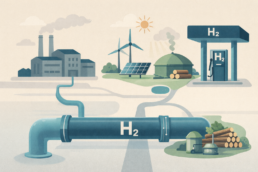
Hydrogen Reality VI: Hydrogen Between Regulation, Infrastructure and Project Reality
In recent months, several important signals have emerged that are worth putting into context. This is not about individual funding calls or technologies, but about the overall direction in which the hydrogen landscape in Europe is evolving.
Following the Innovation Fund – Czech National Info Day, it is becoming increasingly clear that hydrogen is no longer perceived as an experiment, but as a long-term infrastructure topic. At the same time, however, a growing tension is visible between political ambitions, regulatory frameworks and the real feasibility of projects.
Hydrogen is becoming infrastructure – not just technology
One of the most significant developments is the proposed European Grids Package. While it primarily addresses the pressure on electricity grids caused by the rapid expansion of renewables, it also, for the first time, systematically includes hydrogen infrastructure.
Specifically:
- hydrogen network planning is to become part of the TYNDP (Ten-Year Network Development Plan),
- ENNO-H is being established as a counterpart to ENTSO-E and ENTSO-G,
- the European Commission has identified strategic Energy Highways, including two major hydrogen corridors across Europe.
This is a strong signal:
👉 hydrogen is being understood as backbone infrastructure with a multi-decade horizon.
Regulation is driving the market – but at what cost?
At the same time, a large part of the hydrogen market is currently driven by regulation rather than by natural project economics. This is particularly visible in RFNBO, hydrogen mobility and PtX.
- prices are not driven by technological efficiency,
- but by requirements on electricity origin, temporal correlation and quotas,
- demand is often secondary – a response to regulatory obligation.
Regulation has its role in a transformation phase. The problem arises when it begins to limit technological options instead of enabling system optimisation.
Central corridors vs regional reality
European hydrogen corridors clearly focus on:
- large volumes,
- imports,
- long-distance transport.
From an EU energy strategy perspective, this is logical. From the perspective of regions and industry, key questions arise:
- local availability of hydrogen,
- cost after transport and infrastructure,
- dependence on external supply chains,
- implementation timelines.
This reopens the discussion about regional and decentralised solutions as a necessary complement.
Technology mix is not a weakness – but a necessity
Project experience shows clearly that:
- no single technology can solve all applications,
- not every region has the same conditions,
- not every sector requires the same type of hydrogen.
Industrial demand, mobility, energy systems and PtX applications have different requirements in:
- supply stability,
- cost,
- carbon footprint,
- investment structure.
This is why a technology-neutral approach is essential.
Key takeaway from Innovation Fund
The Innovation Fund confirms:
- the EU is ready to invest heavily in hydrogen,
- but expects system-level impact.
Future development requires:
- alignment of regulation and operational reality,
- integrated view of infrastructure and production,
- open discussion about where hydrogen makes sense.
Hydrogen is not an end goal. It is a tool.
I focus on the development of hydrogen projects and infrastructure strategies in a European context.
Kristýna Váchalová
Hydrogen Business Development
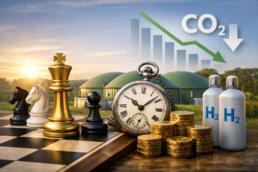
Hydrogen Reality V: Why It Makes Sense to Consider “Green” Hydrogen Beyond RFNBO
In the previous articles, I focused on the differences between individual categories of “green” hydrogen and how European regulation shapes technological choices. In this issue, I would like to move one step further – to a practical question that industry, mobility and energy sectors are facing today:
Does it make sense to invest in the production and use of hydrogen that is not produced under RFNBO, but complies with RED II / RED III?
The short answer is: Yes – if we think strategically, long-term, and in the context of real decarbonisation.
Decarbonisation does not happen overnight
Large industrial projects – whether in steel, chemicals, energy or transport – are not planned in months, but in years. The same applies to:
- the construction of production technologies,
- permitting processes,
- infrastructure,
- integration into existing operations.
Waiting for the “ideal” regulatory state often means waiting too long.
While regulations evolve, emissions are generated every single day. And this is exactly where technologies that comply with RED II / RED III come into play – including hydrogen production from biomass, biogenic residues or other low-emission pathways.
What hydrogen beyond RFNBO brings to companies
From the perspective of industry, mobility and municipalities, such projects offer several concrete advantages:
- real emission reductions already today, not only in the future,
- higher energy independence,
- stable production independent of weather conditions,
- the possibility to integrate circular economy principles,
- preparation of infrastructure, know-how and operational teams.
Hydrogen produced under RED II / RED III has the same quality and usability – in industry, mobility and energy production. The difference is not in the molecule, but in its regulatory classification.
And what about the disadvantages? It is fair to state them clearly
From today’s legislative perspective, it is necessary to openly acknowledge the downsides:
- such hydrogen cannot always be counted towards mandatory RFNBO quotas,
- some companies may face temporary penalties or fees,
- financial support is less straightforward compared to RFNBO projects.
These are real constraints that cannot be ignored.
But this is exactly where strategic thinking becomes essential.
The prepared are not surprised
If a company today:
- invests in technology,
- reduces its emissions,
- sets up processes,
- builds infrastructure,
then at the moment when regulation changes or expands (which happens gradually), it will not be at the starting line, but close to the finish.
While others are still designing, permitting and building, prepared companies can:
- smoothly adapt to new conditions,
- scale up operations,
- or complement their technology with additional elements.
Where does financing fit into this?
European instruments such as the Innovation Fund currently strongly emphasise RFNBO, but at the same time:
- allow support for broader decarbonisation solutions,
- evaluate the overall emission impact of projects,
- and gradually respond to technological reality.
This is precisely why it makes sense to prepare projects already now, even if the conditions are not yet ideal.
Conclusion
Hydrogen produced under RED II / RED III is not bypassing decarbonisation. It is a pragmatic way to:
- reduce emissions,
- prepare for the future,
- and avoid losing time waiting for “perfect” regulation.
It is not about going against the rules. It is about being ready when the rules evolve.
And in decarbonisation, more than anywhere else, one principle applies:
Those who are prepared are not surprised.
I focus on the development of hydrogen projects and infrastructure strategies in a European context.
Kristýna Váchalová
Hydrogen Business Development
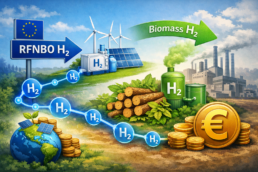
Hydrogen Reality IV: Can Hydrogen Projects Outside RFNBO Still Receive Support?
I recently attended the Innovation Fund – Czech National Info Day, which aimed to present in detail the conditions and expectations of the European Innovation Fund (Innovation Fund, CINEA) for upcoming calls.
My main motivation for attending was to verify whether funding opportunities exist for hydrogen production projects based on biomass for industrial use, and more broadly for hydrogen production technologies that do not fall under the RFNBO regulation but still deliver significant and measurable greenhouse gas emission reductions.
What matters is not the label, but the impact
One key message from the presentations and discussions was clear:
The Innovation Fund is not limited exclusively to RFNBO technologies.
What matters is whether a project:
-
demonstrates innovation (technology, process or integration level),
-
delivers quantifiable greenhouse gas emission reductions,
-
is technically, economically and financially mature,
-
and has a clear application in sectors contributing to major emission reductions, often within ETS-covered industries.
Preparation phase is critical
One of the most important insights from the Info Day was that project preparation is a crucial prerequisite for applying to the Innovation Fund.
Projects must already include key documentation at the moment of application, typically:
-
feasibility study
-
detailed business case
-
lifecycle financial model
-
risk analysis
-
baseline scenario and emission reduction methodology
-
financing structure
High-quality preparation often requires six months or more.
Project implementation timeline
Once approved, projects usually need to be implemented within five years, according to the grant agreement.
This timeline applies to the implementation phase, not the preparation phase.
Role of the Ministry of Environment
For Czech projects, the Ministry of Environment plays an important role as a national contact point and potential partner in complementary financing.
However, the final evaluation and funding decision remains with the European Commission through CINEA.
Practical implications
These insights are particularly relevant for hydrogen production projects based on:
-
biomass
-
biogenic residues
-
other non-RFNBO technologies
Such projects can provide stable energy production, significant short-term emission reductions and economically viable industrial applications.
In my view, this opens the door for a wider range of hydrogen projects than is often assumed today.
I focus on the development of hydrogen projects and infrastructure strategies in a European context.
Kristýna Váchalová
Hydrogen Business Development

Hydrogen Reality III: EU Regulation “On the Table” – Why Not Every Mix Is a Real Mix
When we speak about an energy mix, we usually imagine a diverse combination of technologies working together to meet emission, stability and cost requirements. Logically, a mix should mean choice.
However, European regulation tells a different story.
Not every mix is a real mix. And not every green hydrogen is equally “recognised” as green.
Although I work daily in hydrogen business development, it took me time to fully grasp how strongly regulatory logic differs from technological logic.
Hydrogen “boxes”
Hydrogen can be produced via multiple clean pathways. Yet the EU divides them into rigid categories:
-
RFNBO (most preferred),
-
RED II / RED III hydrogen,
-
other low-carbon technologies.
These categories determine:
-
access to subsidies,
-
quota eligibility,
-
economic feasibility.
RFNBO – the preferred pathway
Strict requirements:
-
additional renewable capacity,
-
temporal correlation,
-
geographical correlation,
-
over 70% emission savings.
In Central Europe, this is technically and economically challenging.
Electrolysers are designed for stable operation. Renewable intermittency creates structural inefficiencies.
RED II / III – broader definition
RED hydrogen can:
-
use biomass and biomethane,
-
operate 24/7,
-
achieve comparable emission savings,
-
reduce costs,
-
support circular economy models.
Technically strong. Economically rational.
Yet often politically marginalised.
The core problem
Hydrogen may be clean, low-carbon and affordable — but if it does not qualify as RFNBO, it does not count toward mandatory targets.
This creates regulatory distortions.
What would help?
Technological neutrality.
Regulation should define emission goals, not prescribe a single pathway.
Hydrogen should become part of a diversified technological mix — just like the broader energy system.
Kristýna Váchalová
Hydrogen Business Development
✉️ info@hyconnect.eu
🌐 www.hyconnect.eu

Hydrogen Reality II: Green Hydrogen Is Not Always the Same. Why? And What Does It Mean for Decarbonisation?
When I heard the sentence “green hydrogen is not always green” a few weeks ago, it made me stop and think. I first encountered hydrogen around fifteen years ago at Daimler AG. Since then, I have repeatedly returned to the topic, and in recent years I have been working with it intensively in both the Czech and European context.
Despite this experience, I must admit that some concepts and connections related to the “greenness” of hydrogen are not intuitive at all. It is often unclear what these terms actually mean—and why certain hydrogen pathways are considered valuable while others are not, even if both can be low-emission or clean.
And I am certainly not alone. Confusion around what is green, renewable, low-carbon, RFNBO or RED-certified hydrogen is widespread across Europe. Although hydrogen is discussed more frequently than ever, many stakeholders struggle to understand why individual technologies fall into different regulatory categories—and what practical consequences this has.
This was the reason why I decided to start writing about this topic: simply, technically, and in an understandable way. For everyone who is dealing with decarbonisation in practice.
Who Is Dealing with Decarbonisation Today? Almost Everyone.
Hydrogen is no longer a niche topic for a small group of technology companies. It affects:
-
energy-intensive industries such as steel, cement, glass and chemicals,
-
logistics companies,
-
cities and regions,
-
the construction sector,
-
aviation and defence,
-
and many other sectors going forward.
Anyone with high emissions is facing the same question: How can fossil hydrogen or natural gas be replaced—and how can European regulatory requirements be met?
And this is where the challenge begins: green hydrogen is not always equally green.
The reason is not technological—but regulatory.
Different Categories of Hydrogen in EU Regulation
The European Commission defines several hydrogen categories that differ significantly from one another.
RFNBO – the “gold standard”
RFNBO (Renewable Fuels of Non-Biological Origin) refers to hydrogen produced via electrolysis using exclusively renewable electricity.
To qualify as RFNBO, strict criteria must be met:
-
additionality of renewable electricity,
-
temporal correlation,
-
geographical correlation,
-
more than 70% greenhouse gas emission savings compared to fossil hydrogen.
As a result, RFNBO is extremely difficult to achieve in countries like the Czech Republic, where stable renewable electricity generation is limited.
RED II / RED III – a different logic
Under RED II and RED III, hydrogen can qualify as renewable if sustainability criteria, emission savings and feedstock origin requirements are fulfilled. Biomass-based pathways are explicitly allowed.
Hydrogen can be produced:
-
thermochemically from residual biomass,
-
from biomethane or biogas,
-
from waste streams that comply with RED sustainability rules.
Alternative low-emission hydrogen technologies
Beyond electrolysis and biomass, several other pathways exist:
-
methane pyrolysis,
-
partial oxidation of biomethane,
-
plasma technologies,
-
reforming with CCS,
-
waste gasification under RED conditions.
These technologies can significantly contribute to decarbonisation, even if they fall into different regulatory categories.
Why Does This Complicate Decarbonisation?
At the HyBaBo conference in Selb (Germany), I heard something that genuinely surprised me:
Companies prefer paying high penalties for missing RFNBO quotas rather than using cheaper, stable hydrogen compliant with RED II/III.
The reason was simple:
“Because it does not count towards the mandatory RFNBO target.”
This, despite the fact that RED-compliant hydrogen can be cheaper, locally produced, available 24/7 and have a very low carbon footprint.
This was a key realisation for me: technological reality and regulatory reality are currently diverging significantly in Europe.
What Is the Aim of This Series?
This series is intended to help those who feel lost in the growing complexity of regulations, acronyms and decarbonisation requirements—just as I once did before I began connecting the dots.
It is not meant to be an academic textbook or a finished guide. Instead, it is a process of exploration, explanation and sharing insights gathered through real projects, discussions and practical experience.
Above all, I want to contribute to ensuring that hydrogen becomes a real tool for decarbonisation—not just a regulatory checkbox.
Kristýna Váchalová
Hydrogen Business Development
✉️ info@hyconnect.eu
🌐 www.hyconnect.eu

Hydrogen Reality I: Where Are We Today?
In recent months, I have increasingly encountered statements claiming that “hydrogen has failed” or that the “hydrogen bubble has burst.” In my view, such assessments miss the point. What we are witnessing is not the end of hydrogen, but rather the end of a phase of exaggerated expectations.
The hydrogen economy has never evolved as a single topic, a single technology, or a single market. From the very beginning, it has consisted of a set of highly diverse segments, each with different dynamics, timelines, and levels of technological and economic maturity. This is becoming increasingly evident today.
Hydrogen Is Not One Market
When we talk about hydrogen, the discussion is often reduced to a simple question: “Does it work, or does it not?”
In reality, hydrogen represents a complex ecosystem of interconnected areas, including:
-
different hydrogen production pathways,
-
infrastructure and logistics,
-
specific applications in industry, transport, and energy,
-
regulation, certification, and financial instruments.
Each of these areas is at a different stage of development. While some technologies have been highly visible in recent years, others are progressing more quietly—but often in a far more systematic manner. Assessing “hydrogen” as a single, uniform concept therefore inevitably leads to distorted conclusions.
From Ambition to Feasibility
The period between 2021 and 2023 in Europe was characterised by strong ambitions: strategies, targets, political declarations, and announcements of large-scale projects. This phase was both necessary and important. At the same time, it was inevitable that some of these plans would collide with reality—namely with:
-
cost structures,
-
regulatory requirements,
-
infrastructure availability,
-
and, above all, insufficient demand.
For this reason, I would not describe the current phase as a slowdown, but rather as a phase of consolidation. The market is shifting from visions to very concrete questions:
-
Who will actually offtake hydrogen?
-
Under what conditions?
-
And which projects are truly investment-ready, rather than merely conceptual?
The Key Role of Offtake
Based on my experience, success today depends less on the technology itself and far more on clearly defined use cases. Projects that have a secured offtaker, strong links to existing industry or infrastructure, and a realistic business model stand a significantly higher chance of success than isolated projects without a clear demand anchor.
This is precisely where the market is beginning to differentiate. And this is also why the current phase is challenging for many companies and investors—yet at the same time strategically decisive.
Consolidation as a Necessary Phase of Development
Every technological transformation goes through a phase in which expectations are separated from feasibility. Hydrogen is no exception. The current phase does not represent a failure of the concept, but rather a necessary step toward transforming pilot projects into stable operations and individual initiatives into a functioning system.
For companies and project developers, this means carefully selecting next steps, minimising risks, and building partnerships that make sense in the long term—not only on paper.
What Will Be Decisive Going Forward
The future development of the hydrogen economy will not be determined by the number of strategies or by media visibility. What will matter is the ability to:
-
connect production, infrastructure, and end use,
-
operate within the existing regulatory framework,
-
and prepare projects that remain viable even beyond subsidy schemes.
Hydrogen remains an important tool for decarbonisation—not as a universal solution, but as part of a broader energy and industrial system.
Conclusion
The hydrogen sector has reached a point where the distinction between promises and reality is becoming clear. For those willing to work with this reality, this is paradoxically a very strong and promising phase. It is precisely now that it becomes evident which projects have a solid foundation—and which will remain at the level of expectations only.
Kristýna Váchalová
Hydrogen Business Development
✉️ info@hyconnect.eu
🌐 www.hyconnect.eu

Integrated Hydrogen Solutions by HyConnect – from Biomass to H₂ Mobility
💧 Integrated Hydrogen Solutions – from Biomass to Mobility
Hydrogen is becoming a cornerstone of Europe’s energy transition.
HyConnect offers comprehensive solutions across the entire hydrogen value chain – from production to practical applications in industry, energy, and mobility.
🌱 Green Hydrogen Production from Biomass
In cooperation with the German company HiTES Holding GmbH, HyConnect provides a technology for producing green hydrogen from biomass – a highly efficient and environmentally friendly alternative to electrolysis.
The HiTES technology enables up to 70% efficiency and CO₂-negative hydrogen generation from biogenic residues such as forestry, agricultural, or municipal waste.
This process not only minimizes the carbon footprint but also produces a valuable by-product – biochar.
Compared to electrolysis, this approach allows for 60–70% lower production costs, even without public subsidies.
⚙️ HyConnect’s Comprehensive Hydrogen Ecosystem
Building on the hydrogen production stage, HyConnect implements further technological solutions with its partners – including storage and distribution, mobile and stationary refueling stations, and applications in vehicles and industrial operations.
💡 Our project scope includes:
-
Feasibility studies and project preparation,
-
Site selection and biomass sourcing,
-
Technology design and supplier coordination,
-
Implementation and commissioning of facilities.
🔋 H₂ Cogeneration Units – Efficient Energy from Hydrogen
HyConnect’s portfolio also includes hydrogen cogeneration units (H₂-CHP), enabling the combined generation of electricity and heat directly from hydrogen.
These systems make full use of every kilogram of H₂ produced and significantly improve overall system efficiency.
H₂-CHP units are ideal for:
-
Industrial sites – providing local power and heat,
-
Municipalities and energy communities – ensuring autonomous renewable energy supply,
-
Circular economy projects – connecting local biomass resources with local energy consumption.
This creates a fully integrated hydrogen cycle: production – storage – utilization.
🌍 Working Together for a Sustainable Energy Future
The mission of HyConnect is to promote economically viable and regionally anchored decarbonization based on local resources, circular economy principles, and international collaboration.
Each project represents an opportunity to connect innovation, people, and regions – from the first idea to real-world application.

Hydrogen and International Cooperation
???? Action and power of the LikendIn! There are no limits on LinkedIn! ????International cooperation is now very possible. ????
???? Lluis Sanvicens sent me a contact request at the end of February, which I was very happy to confirm. Right after that he sent me a message with a business offer. ????
???? Lluis was looking for a partner for a study - "???????????????????? ???????? ???????????? ???????????????? ???????? ???????????????????????????????? ???????? ???????????????????? ????????????????????????????????" - for ???????????? ???????????????????? ????????????????????????????????.
???? As Lluis dominates with very high and valuable expertise in transport, energy and project management, he was looking for someone with hydrogen knowledge. He immediately sent me all the documents about the study so that I could make a decision.
???? I had to go through everything very carefully and think about it first. That took some time.
???? In between Lluis was very active. On LinkedIn he has Dr. Canan Acar found. She formed a team with him for the study.
???? After a few days, Lluis contacted me again. The two still need someone who has experience in automotive and hydrogen. I didn't hesitate any longer and I immediately agreed that I would be very happy to join the team and take part in the study.
???? The preparation wasn't easy. Lluis organized everything very brilliantly and shared the tasks between us. Each of us had one or more parts to be responsible for. I have to say that Lluis had most of the duties to those in charge. He also has a lot of experience conducting the studies. ????
???? My part was " ???????????????????????????????? ???????????????? ???????????????????????????????????????????? ???????????? ???????????????????????????????????????? ????????????????????????????????". Since I have some ideas in my head, it was no problem for me to write the methodology for them. ????
???? Lluis sent all the documents to the EIT UM in good time. We then waited excitedly for almost a month for the results of the tender. The result came a few days ago - unfortunately it was not positive.
???? For me, however, it was a great experience, as I have not had the opportunity to conduct such studies until now.
???? I am very happy that I had the opportunity to experience this, to participate in the preparation and, above all, to get to know the Lluis. I think we will have another opportunity to work with Lluis in the future.

By "pushing" battery-electric cars into the market, we will not achieve any emission reductions, says the expert
According to the EU Commission, cars with internal combustion engines should no longer be sold in the Union by 2035. It remains to be seen to what extent this proposal, which still requires the approval of the European Parliament and the 27 countries, is realistic. "But experts and customers should have the right to decide which alternative drive will prevail," says Kristýna Váchalová, who was involved in the development of hydrogen cars in the Daimler Group.
She has extensive experience in the development of petrol, diesel, hybrid and hydrogen drives, mainly for Daimler AG for cars and trucks as well as buses. She has worked in hydrogen vehicle development for 8 years. It developed the intakes and exhausts of hydrogen cars. She received a patent for the development of a system for catching and controlling water leakage from the exhaust. Váchalová also participated in a hydrogen bus feasibility study and has completed a hydrogen system feasibility study for five different trucks.
What will you learn in the article?
- Advantages and disadvantages of hydrogen propulsion.
- Are hydrogen propulsion dangerous?
- Where are hydrogen propulsion used and where is electromobility?
More in the post:
